Showing posts with label internet marketing. Show all posts

Sunday, 14 December 2014

SEO PowerSuite – Everything You Need for Your Website’s SEO

One thing that generally drives me nuts about SEO tools is the waiting game. A lot of tools that I have tried in the past would have you enter your domain and it would take time to compile the data about your website. For this review, I set up the Mac-version of SEO PowerSuite in ten minutes. Four tools, ten minutes. Within fifteen minutes, I had entered my website information, connected my Google Analytics & AdWords accounts, and received most of the data from each tool. That I find impressive – especially for a toolset that offers a free license.

The SEO PowerSuite Toolset

Now, let’s take a quick look at what each tool within the SEO PowerSuite can do for your SEO.

Rank Tracker

Rank Tracker is the keyword monitoring portion of the SEO PowerSuite that will keep track of your keyword rankings. When you start up the tool, it will ask for your website. It will then generate a list of keywords based on your Google Analytics data and what your website is optimized for.

Once you have added your keywords, you can select them all and click on the Check Rankings button to get your current rankings in search for each keyword. Select all of your keywords again and click on the KEI button to get search volume for all of your keywords.

seo-powersuite-rank-tracker

There are lots of additional things you can do with Rank Tracker. For example, you can highlight one of your keywords, click on the Keyword Difficulty button below your list of keywords, and then click on Update to get detailed metrics about your competitors in search to determine difficulty.

seo-powersuite-rank-tracker-2

You can also get keyword suggestions based on a highlighted keyword from your list using the Suggest Keywords button at the top left.

seo-powersuite-rank-tracker-3

From here, you can add new keywords to your project and check the rankings.
As you can see, Rank Tracker does more than just check your rankings. It’s a powerful keyword research tool!

Website Auditor

The Website Auditor tool does a comprehensive check of your website’s on-site search optimization. Any errors it finds, it details for you so you can get them fixed.

seo-powersuite-website-auditor

In addition to an overall site check, Website Auditor will do an in-depth review of specific pages / content on your website and give you an overview of key metrics including domain strength, domain info, and social sharing signals.

seo-powersuite-website-auditor-2
By the time you have reviewed and acted upon the data provided by Website Auditor, you will have a fully SEO optimized website.

SEO Spyglass

SEO Spyglass is a tool that analyzes your website’s backlink profile. You will receive a detailed view of your backlinks.

seo-powersuite-seo-spyglass

Using the tabs, you can see additional link details, penalty risk, and links organized by category. You can click on the Statistics button to get a wide variety of statistics on your backlink profile, such as the percentage of .com links, the number of root domains linking to your website, and much more. You can also run a summary report of your backlink profile.

seo-powersuite-seo-spyglass-2

SEO Spyglass is, overall, a powerful backlink analysis tool.

LinkAssistant

Last, but not least, is LinkAssistant. This is the tool you use to build links to your website. It will help you find link opportunities based on keywords, competitors, submission forms, and URLs on a specific webpage.

seo-powersuite-link-assistant

LinkAssistant will collect any contact information for the potential link opportunities that you select and give you the option to email them a link request. While the software has templates that promote reciprocal linking, I would HIGHLY suggest using those and instead customizing the template to ask for a link based on content relevance and worthiness. Alternatively, you can just grab the email addresses LinkAssistant finds and email the website owners through your own email service.

Pricing

SEO PowerSuite has three editions – free, pro, and enterprise. Click on the image below to get a the rundown of the overall features you will get with each edition.

seo-powersuite-features-editions

You can visit the comparison page for more details on specific features offered with each of the four tools included in SEO PowerSuite for each edition.

All of the screenshots and features mentioned earlier are part of the free version. For startups, small businesses, and individual website owners, the free version will give you plenty of valuable insights and actionable items for your SEO strategy. The biggest downside to the free edition is the inability to save your project. So if you stick with this edition, you would need to re-enter your data each time you re-opened one of the tools. That alone makes the license worth it.

Resources

When you sign up for your free license for SEO PowerSuite, you will be redirected to a page with a quick, step by step guide on how to use your new software.

seo-powersuite-step-by-step-guide

You can visit their video tutorials page to watch short tutorials that help you use each of the features that come with SEO PowerSuite’s toolset.
You can also visit their screenshot library to see different features in SEO PowerSuite plus get tips on how to use them.

seo-powersuite-screenshots

In short, no matter how you like to learn, SEO PowerSuite has a guide to help.


http://kikolani.com/seo-powersuite-everything-need-websites-seo.html

Friday, 28 November 2014

Four eCommerce Pitfalls and How to Overcome Them


In my last post, “5 Reasons eCommerce Makes a Great First Business,” I indulged in a gushy e-commerce lovefest.  Unfortunately, when you dig a little deeper, blemishes appear underneath the flawless facade. E-commerce is my top choice for a first-time business owner and a GREAT low-risk model, but it’s unfortunately NOT an impenetrable fortress of business acumen and success.  I’ll outline a few of the hurdles, and then explain why they shouldn’t deter you from building your own profitable business:

High Competition

The Problem:  Selling an existing product online — especially via drop shipping — causes you to face a fair amount of competition, especially compared to creating your own product.

Why It’s Not a Deal Breaker:  For a first-time business owner, many operational variables are required for success (e.g., marketing, quality service, etc.).  Ensuring that viable product demand — arguably the most crucial element for business success — exists allows you to focus on other critical aspects of the business, increasing the likelihood of success.  For the first-time entrepreneur, I believe accepting a bit more competition to ensure proven market demand is a wise trade-off.

Unless you’re going into the extraterrestrial estate-planning business, you’re going to face competition regardless of the niche or field you’re in.  Increased competition usually (though not always) means a larger market and more potential profits, hence the larger number of people fighting for a piece of the action.  So, assuming you have a solid strategy for differentiating yourself, this shouldn’t be a deal breaker.

Low Margins

The Problem:  Again, it’s much easier to sell an existing product than it is to build one yourself, so margins for e-commerce are almost always lower than those for software and other digital products.

Why It’s Not a Deal Breaker:  If you take one thing away from this post, it should be this:  If you try to compete on price, your e-commerce business will almost certainly be DOOMED.  You may have loads of sales and tons of happy customers, but you will never turn it into a sustainable, profitable business.  Why?  Because there will always be some schmuck with awful service and a miserable-looking site who will undercut you on price.

To be successful, you MUST differentiate yourself in some other way.  A prime example is Crutchfield, who specializes in audio equipment.  There are a ton of online businesses selling the exact same products, but Crutchfield is able to charge a premium because they have an incredibly helpful and informative site.

This is a crucial topic that is beyond the scope of this article, but one which I’ll cover in detail in a future post. It’s also a topic covered extensively in my eCommerce Training video series.  For now, suffice it to say that differentiating yourself based on something other than price is KEY to e-commerce success.

It Takes Time

The Problem:  If you’re starting an e-commerce business to pay off the mobster next door by the end of the month, it’s time to leave town.  E-commerce is NOT a get-rich-quick business.  It takes time, often years, to build a profitable business.

Why It’s Not a Deal Breaker:  If this was a deal-breaker for you, you had very little chance at any kind of business success, online or otherwise.  All significant business success takes focused effort over an extended period of time.  Get-rich-quick schemes do NOT work.  They make one person rich:  the guy selling the system.

That said, e-commerce will take more time to become profitable than, say, an e-book you write over the weekend.  Sure, you might make a few dollars the first couple of weeks, but your chances for turning it into a full-time, highly profitable business are much lower.  Our goal with e-commerce is to build a highly automated, profitable business.  We want to trade a lot of up-front time and effort now for a highly automated income stream down the road.  Like all good things, it takes time — but it’s definitely worth the investment.

Non-Tech Business Valuations

The Problem:  We’re all familiar with the tech rags-to-riches stories.  Facebook, started by a guy in his dorm room, is now valued at between $50 billion and $100 billion.  Recently, the photo-sharing app Instagram — just 18 months old– was bought for $1 billion.  Insane.  As fun as these kind of outcomes are to dream about, it’s going to be difficult to buy the Yankees with the profits from a niche e-commerce site.  If world-changing wealth and prestige are your goals, and you’ve got a great income already, e-commerce may not be your best bet.

Why It’s Not a Deal Breaker:  Our goal isn’t to take a high-risk bet in hopes striking it uber-rich.  Our goal is to generate an automated, passive income stream that has a high probability of success and brings more freedom to our lives.  This could mean the ability to quit a job, start another e-commerce site or launch a venture with a higher risk-to-reward ratio (but that doesn’t generate much cash flow).  For all these purposes, e-commerce is ideal.

Not Perfect, but Good

So e-commerce isn’t a magical unicorn that will fly us over the rainbow to success and riches.  Far from it.  It is, however, a proven, low-risk model for generating sustainable passive income, making it a great choice for first-time online entrepreneurs.


http://www.ecommercefuel.com/4-major-drawbacks-to-ecommerce/

Friday, 21 November 2014

8 Reasons Why Ecommerce Businesses Fail

Starting an ecommerce business can be fast, relatively easy, and not very expensive. But with something like an 80-percent failure rate, creating a successful online business is more challenging than some entrepreneurs imagine.

Although each new business is unique, there are common contributors to ecommerce failures. Understanding these possible pitfalls should help you to avoid them, beat the statistics, and have a successful ecommerce business.

1. No Real Investment

It is possible to open an online store for just a few hundred dollars. But that in no way means that a few hundred dollars is all that you will need to invest.
Like any new business, a fledgling online store may require several infusions of capital and a significant amount of labor.

Brick-and-mortar retailers are often the worst about adequately investing in an online store. If you already have a physical store and are adding an online shop, think about that new ecommerce business like a new location. It is going to need a similar investment in time and at least a portion of what you would invest in money.
Even relatively small retailers will happily invest $50,000 or $100,000 into a physical store, but decline to spend $5,000 for an online one which may actually have greater sales potential.

2. No Cash Flow

At the most basic level, cash flow is the movement of money into and out of a business. New ecommerce companies can get into trouble when they don’t have enough cash to keep operating. An example of this is when an entrepreneur invests all his cash in inventory and there is no money for marketing — so sales don’t rise and the business is stagnant.

To avoid cash-flow problems, try to spread out expenses, so that everything is not due at once. Look for the opportunity to pay for inventory on terms of 30, 60, or 90 days. Don’t over invest in advertising or would-be search-engine-optimization gurus. Also spend or reinvest based on actual revenue, not projected sales.

3. Poor Inventory Management

Depending on the business model, inventory management can be one of the most significant problems new ecommerce operations will face. Buy too much inventory, and, as mentioned above, you could cripple cash flow. Buy too little inventory and you might be missing out on sales or even disappointing customers.

What’s more, ordering products is often not as simple as you might think. Vendors may have distinctly different lead times, meaning that it might take one supplier a few days to get a reorder to you, while another supplier could take a few weeks, so that you would need to place reorders at very different times and at very different inventory levels.
Freight costs, associated with getting inventory to your business, can also be significant.

4. Too Much Competition

The Internet is a land of opportunity for even the smallest of businesses. But almost no online startup can survive in the face of significant, established competition.
This is most often a problem when new ecommerce stores seek to sell the very same products that are offered by much larger retailers.

Walmart can be serious competition for new ecommerce businesses.

Walmart can be serious competition for new ecommerce businesses.
As an example, it could be very difficult for a new ecommerce store to try to sell Microsoft’s Xbox, which is already available at hundreds of online retailers, including Walmart, Amazon, Best Buy, GameSpot, Newegg, Toys”R”Us, and many more.

Simply put, it will be difficult — or at least relatively more difficult — to sell mass-market products than it will be to sell niche or unique products. So find your niche.

5. A Bad Website

Even the best business plan cannot always overcome a bad website.
A modern ecommerce site must be secure, functional, have great search, adapt to mobile devices, and load very quickly. Anything less is unacceptable.

What’s more, there are many excellent ecommerce platforms from which to choose. Many of these require very little technical expertise, so there really is no excuse for having a bad site. (I addressed the many choices of platforms earlier this year, in “Navigating 2014′s Crowded Ecommerce Platform Market.”)

6. Poor Product Photography

Online shoppers cannot physically inspect the products you sell, so they will need a strong visual representation of those products to help them understand it, want it, and buy it. Thus, poor product photography is one of the cardinal sins in online retailing.

Use successful online sellers as the standard for your own product pictures. If the product photography you’re using is not as clear, focused, and clean as what you would find on sites like Zappos, L.L.Bean, Suitsupply, and Best Made, those photos are probably not good enough.

L.L.Bean is an example of a retail with excellent product photography.
L.L.Bean is an example of a retailer with excellent product photography.

7. No Website Traffic

Few things will kill a retail, or even a wholesale, business as quickly as having no shoppers. In the ecommerce context, website traffic is the flow of shoppers into and out of your store. If you want to make sales, you need traffic.

A fast way to get traffic is with pay-per-click advertising. But it can be expensive, so make certain that you understand it before investing a lot.

A much slower, but ultimately more powerful, way to drive traffic is with content — i.e., content marketing, social media, or on-site product merchandising.

8. No Patience

An ecommerce business takes time to grow. Too often new business owners imagine that they will earn profits immediately. But that is not typically the case. Don’t be surprised if it takes several months to earn even meager profits.


Sunday, 16 November 2014

Boring Products? No Problem. How to Write Compelling Copy for Anything.

Writer's BlockThis is a post from Laura Serino, the new Content & Community Manager for eCommerceFuel.  She’s come onboard to help me (Andrew) with top-notch blog content and improving our private forum.  
Laura joins the team with years of professional copywriting and eCommerce experience, which you can learn more about here.  Expect to hear more from her in the months ahead.  Take it away, Laura!
——————————————————————–—-—-—-—————-—-—-—-
Consider tube socks.
They’re white and made from cotton, ribbed with an elastic hem. They look bad with black sneakers and shorts.
There isn’t really anything exciting to say about them.
Or is there?
If you’ve ever wanted a pair of socks that say “tourist”, these are it.
Nothing comes between you and your sneakers. Except for these.
Worn by Dad, Made Cool by Michael Jordan
Cushioning your heels since 1973


It’s possible to entice a customer to purchase anything, even a pair of socks. The most mundane item has the potential to tell a good story. It just takes a bit of coaxing to get it out.

Read Great Copy

Before you can write great copy, you’ve got to read it. I very rarely pull out my laptop and get straight to work on copy after reading manufacturer’s notes or spec sheets. I won’t do that until I’ve collected a beefy, inspirational folder of product copy first.
When I worked in magazines, one of my bosses used to always say, “Read the New York Times before you tackle that.” She knew the importance of reading inspired prose before you can produce it yourself.

There are many companies that write excellent, compelling product copy. Some of my favorites include Patagonia, Groupon, ModCloth, Filson and of course, L.L.Bean.
Finding inspiration doesn’t have to come from other e-commerce sites though. Books, magazines, blogs, and yes, even the New York Times can end up a valuable source of copy inspiration.

Ignore the Competition…at First

When I’m writing copy, I love to see what similar businesses are doing. But doing that can also trip me up. How often have you looked at competitors websites and said, “Look at what they’re doing. We need to do that too!”

It’s very easy to fall in line with competitors and stay safe.

You’ve probably all heard the story about Schlitz beer. When the ad guy toured the brewery he was impressed with the vast array of machinery and technology that went into brewing. He asked if they were the only company doing that. The brewmaster said no, every beer company does it. But no one was talking about it. And thus, this famous beer ad was born.

I’d never suggest ignoring the competition. Instead, don’t make it your first priority. Focus on the product and who you want to sell to first. Strategize the selling points and how to make your point clear and concise. Make sure the features of the item are obvious to any potential customer. Once you’ve checked those off your list, sure, go check to see what your frenemies are doing.

Turn a 50-Word Description into a 500-Word Story

One of my favorite exercises in product writing is longform stories. A long form is what it sounds like: waxing poetic about something you wouldn’t normally flesh out into a substantial story.
When I wrote for L.L.Bean, the copywriters would pull out the top 20 products that the business wanted to get behind. We’d each try and create a longform story for each item, almost as if it was the subject of it’s own full-blown marketing campaign.

I’ve done this for everything from wreaths to gift cards to canvas tote bags.
During one exercise, I was tasked with writing a story about cotton sheets. They weren’t a fancy thread count or made from the highest quality. They were very basic—borderline boring.
For the exercise, I started to jot down notes about sheets. A few thoughts stuck, one of which reminded me of being a kid and running through them hanging on the clothesline. Then I started thinking about how great it feels to lay on sheets that have dried in the sun.

And then a story came through. Then a headline. Eventually, new product copy, convincing the customer that these classic cotton sheets are just like the ones Mom used to hang on the line to dry. They’re soft yet sturdy, smooth to the touch—maybe with a scent of summer woven in.

Tips for Uncovering a Narrative

I understand that not every site has professional copywriters churning out the copy. If the idea of producing a lengthy narrative feels downright ambitious, try these steps first.

Brainstorm.

This is going to sound a little hippi dippi to some of you, but think about the product you’re selling and write down anything that comes to mind. Seriously! If you’re selling a tractor and the name “Betsy the Cow” comes to mind, just write it. Feel free to be as silly as you want. It’s just an exercise, not something all of your customers will see.

Walk away.

Have some lunch. Go back to your list. Review what you wrote. Has a theme emerged? Do you focus on the durability of an item? The classic appeal of it? The technology? See if something jumps off the page at you and try to run with that theme.

Hash it out with someone.

Some of my best longform ideas came from a brainstorm over a beer. Get others to weigh in on your ideas, let them know what you’re stuck on and just talk it out. It never fails me. Especially over a beer.

Start crafting a story.

Here’s the hard part. You want to try and write a story about the theme that emerges. I’ve been able to produce 1,000 word longforms about a product, but even a 100 word story is great. I’ll also try and come up with at least five headlines for my longform story. These can end up being a great email subject line, a marketing campaign idea or a new angle to your product copy.
Longform exercises are a great stretch for the brain. Sometimes a great headline will come from it or a new selling angle. They may not always translate perfectly into gripping stories, but you’ll always find a gem from the exercise.

Grill The Makers

If you purchase items from a manufacturer or wholesaler, you’re not always going to know the details worth telling. Like anyone that is very close to something, they won’t often even know that there’s a story there. It takes a little digging. Sometimes a lot of digging.

I worked as a copywriter for a new fashion line and we’d have meetings where the designers would walk us through the products. As designers that already had their heads in the next season, these meetings were often very methodical: fabric, country of origin, care details, done.

Asking questions was important. I’d grill them about the stripe or a particular pattern. I would try and see if there was inspiration behind a particular style. The more questions I’d ask, the more I got out of them. I’d go through these meetings and have many a ha moments—and I think the designers would too.
I always remember to ask the “why” question too. Why this product?
It’s an important question to ask the people who made it—but to also ask yourself if you’re the one selling it. Does it fill a need in our business? Does it make someone’s life easier? Is it something a hobbyist has to have?
Get the background, but get the “why” too. That answer makes it easier to get the information you need to deliver compelling copy to potential customers.

Remember the Benefits

As much as I like to think every customer would read a killer headline about tube socks, lean back in their computer chair and say, “Man, that copywriter needs a raise. I want to order ten of these from reading that line alone!” I realize I’m kidding myself.
Though a good copywriter loves to tell a good story, it’s more than that. Our job is to craft something compelling, but to sell something too.
After I think I’ve picked up on a good story or a nice lead, I go through the checklist of what all great copy needs.

Are the most important features highlighted?

A customer should have all the information they need so they choose to make a purchase.

Is the selling benefit obvious to the customer?

It shouldn’t take anyone too long to find the selling points and key features for anything they want to buy.

Does the tone match my intended audience?

Be careful not to be too self-indulgent. Speak to your audience in the tone they expect. You wouldn’t use words like “flirty” if you’re selling Norwegian sweaters or “sleek” if you’re peddling construction boots.

Am I being clear and concise?

We all want to write fun copy that’s engaging. But taking it too far can backfire quickly. Lead people in with well-written copy, tell an applicable story and then remember the selling points.

Write Like an Editor

Have you ever googled something like “oversized beach towels” or “solar powered radios” (can you tell I want to be in Costa Rica?) and rather than find products, you stumble across a great article?
This happens to me all the time and I’ll tell you why: magazine editors are secretly awesome product writers.
The goal for print publications and their websites are similar to that of an eCommerce store. You want someone to find your site, start clicking around and stay for a while.
We all know that you only have several seconds to engage a visitor before they are off to the next thing. Oh the pressure!

I love reading copy from an editorial vantage because in many ways, their goal is the same as that of a store owner. If they write about an oversized beach towel, they want to tell you why they’re taking up space to highlight it.
Here’s a few examples of magazine copy that could easily double as compelling product copy.
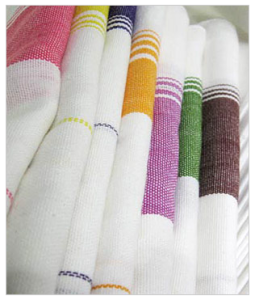
Towels from Real Simple
Light, hand-loomed cotton is quick drying and wonderfully thirsty. Roll one up in a suitcase or swap your thicker set with several of these come spring. Available in nine colors.
(via Real Simple Magazine)

Suitcase from GQ

This new rolling carry-on from the Dror for Tumi line was designed to solve one of your most vexing travel problems: being able to pack light enough on an outbound flight to avoid checking luggage, but having adequate room on the return for all the goods acquired on your journey. Other expandable luggage may give you a few inches of extra space, but this one nearly doubles in volume and, amazingly, has rigid walls, even when fully expanded. The transformation is made possible by rock-solid hinges, which lock firmly into one of three positions. And, with a hardshell exterior that’s faceted for strength, and you’ve got a suitcase that’ll outwit even the most reckless baggage handler. The line goes on sale next month: Plan your itineraries accordingly.
(via GQ Magazine)
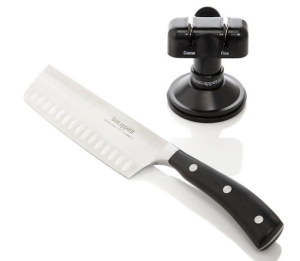
Nakiri Knife from Bon Appetit

While you won’t be able to do the food-reality-TV favorite rock-and-chop chiffonade trick, this cleaver-like shape is still great for everyday use. It’s a traditional Japanese knife specifically designed for cutting vegetables (Nakiri is the name of the style), but it makes a beautiful all-around chef’s knife.
(via Bon Appetit Magazine)
Product copy doesn’t have to be fun or informative, spec-heavy or story-driven. It’s possible to include the best of both worlds.
So there you have it. Even that economy pack of tube socks is worthy of some thoughtful story telling—even if it does come down to the difference between ankle-height or calf-height in the end.


http://www.ecommercefuel.com/writing-product-descriptions/

Thursday, 13 November 2014

9 Resources Online Store Owners Can Use to Create Beautiful Marketing Content

feature

As a store owner, you understand the importance of beautiful design across your online presence. You know that great design leads to more sales and more revenue.

However, if you are like most online store owners you probably don’t have a design background and years of experience with tools like Photoshop and Illustrator.

So how can you create beautiful marketing content that drives more conversions and revenue?
When we were putting together our guide on how to get better marketing results with beautiful design, we spent countless hours searching the web for tools, templates & resources that could help people like you create beautiful marketing content.

In this post, we wanted to share some of our favorites with you in order to help you create beautiful marketing content that drives results for your store.

1. Canva

Canva is a great tool for creating beautiful marketing images. It contains thousands of beautiful stock images and then you can add different elements, such as text, banners, buttons, etc on top to create an awesome piece of visual marketing content.
What sets Canva apart is it’s drag and drop visual editor, which means you can simply select the elements you want and drag and drop them to the exact spot you want them.

Here’s some examples of images created using Canva:


2. PlaceIt

PlaceIt is a great tool for showcasing screenshots of your application, website or digital product in various devices. You can either upload an image from your computer or enter a URL, and PlaceIt will grab the image and ‘place it’ inside the screen of your choice.

What makes PlaceIt so great for store owners like you is its wide variety of screens and devices, meaning you can easily add your screenshots to everything from a Samsung Galaxy sitting on a desk to a MacBook Pro sitting on a park bench.

Here’s some example images created using PlaceIt:


3. Death To The Stock Photo

Death To The Stock Photo is a free subscription service that emails you a handful of beautiful photographs every month for use in your marketing content.
The fact that you only get a few images sent to you each month can make it difficult if you need a specific image for a specific campaign, but there is also a premium option which gives you access to the whole archive of photos and allows you to download them whenever you need.

On a personal level, I’m a huge admirer of great photography so I subscribe just to get a few beautiful photos in my inbox each month.

Here’s an example of stock photographs available on Death To The Stock Photo:


4. Graphic River

Graphic River is a design marketplace where professional designers can upload their work and store owners like you can purchase it for use in your marketing content. There are over 285,000 items for sale on Graphic River and the site is well-categorised with great search functionality, making it easy to find the exact item you are looking for.

For online store owners like you, there are some great icons and banners on the site which can help make your next marketing or promotion piece more visually appealing.

Here are some examples of banners available for sale on Graphic River:


5. SnagIt

SnagIt makes it easy to capture screenshots and videos of anything you see on your screen, and can be great for capturing screenshots of your website for use in your marketing content.
What sets SnagIt apart is it’s built-in editing abilities which allow you to modify the screenshot before saving it. With SnagIt, you can easily:
  • Add elements to screenshots - You can easily add text, speech bubbles, arrows, circles, and more to screenshots to highlight certain key elements in your screenshot or provide some additional commentary and information.
  • Add effects to screenshots - You can easily add effects such as shadows, reflections, fading and more to your screenshots to give them that professionally designed look.
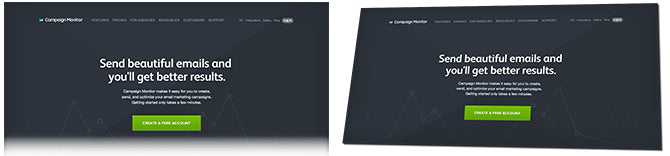
Here’s some example screenshots captured using SnagIt with the Fade and Perspective effects applied:


6. IM Free

IM Free is a stock photography website that offers thousands of beautiful stock photographs for free.
The photography on the site is far above the average, cheesy stock photos you find elsewhere on the web, and all the images are really well categorised so it’s easy to find a beautiful stock photograph for your marketing content.

Here’s an example of stock photos available for free on IM Free:


7. Canvas

Canvas is a unique email template builder from Campaign Monitor that let’s you easily create beautiful HTML email campaigns in minutes.
What sets Canvas apart is it’s unique drag and drop interface. Most email editors only allow you to add text and images into pre-determined places set by the template, however with Canvas you can literally drag and drop images, text, buttons & more into whatever layout you want.

All emails created by Canvas are responsive so they look great on mobile devices as well, and once you’ve finished creating your email campaign you can either signup for an account to send the email and view the results, or you can download the email as HTML and send it from your existing email tool.

Here are some examples of beautiful email campaigns created using Canvas:


8. The Noun Project

The Noun Project is an online collection of free and paid icons which you can download and use in your marketing content.
The Noun Project is basically your one-stop shop for icons. It features a great search functionality that allows you to find whatever icons you need for your content, and a simple search for terms like ‘plane’ or ‘book’ will return hundreds of icons you can use.

Here are a few examples of icons you can find on The Noun Project:


9. Web Developer Chrome Plugin

Have you ever looked at another website or online store and wanted to know what colours they were using, or what images they featured?
Web Developer is a plugin for Google Chrome that gives your browser a bit of extra functionality. While its primarily targeted at developers, there are a few handy tools in there for those wanting to create beautiful marketing content, including:
  • A ruler - Web Developer includes a ruler which allows you to measure the dimensions of a certain element and get the exact height and width in pixels. If you’re creating images or content for a particular size, this is a great tool for working out the dimensions you need to work within.
  • A color picker - Web Developer includes a color picker that allows you to click on a certain part of a website and see exactly what colour that part is. You can then use that colour in your own marketing designs.
  • A browser resizer - Web Developer allows you to resize your browser to different screen sizes popular on various devices, such as mobiles, tablets, laptops & desktop computers. This enables you to see what your content looks like on different screen sizes and make any necessary changes to ensure it looks great everywhere.

Conclusion

With an increasing amount of email campaigns & social media posts competing for your customer’s attention, it has never been more important to embrace the power of beautiful design in driving marketing results.
By leveraging some of these tools, online store owners liek you can become masterful digital artists, creating beautifully designed marketing campaigns that increase your traffic, sales & revenue.


 http://www.shopify.co.uk/blog/15492504-9-resources-online-store-owners-can-use-to-create-beautiful-marketing-content

Saturday, 8 November 2014

Marketing lessons from scary Halloween movie monsters

Freddy_header

It’s Halloween—and what’s scarier than some iconic Halloween horror monsters? Answer: the terrifying experience of running an ecommerce store. Fortunately, Freddy Krueger, Frankenstein, Chucky, and Michael Myers all have some advice to offer when it comes to your ecommerce marketing. Whether you want to know if your personalized marketing is shockingly creepy, or you need a site designed boo-tifully for conversions, this post is a treat with some strategic marketing tricks.

1. Freddy Krueger

Freddy Krueger is flat out creepy, and consistently ranks among the top 3 in lists of horror monsters. This 4 knived, burnt faced, man dressed in tattered clothing harasses his innocent victims through reality or dreams, endlessly tormenting them with their own personal fears. Don’t let your personalized marketing do the same type of thing. We live in the age of big data. We can track customers’ online behaviors, and effectively target them, but some customers simply find it creepy and intrusive.

Marketing personalization is effective, no doubt about it. But at a certain point, a customer can get spooked by an email that’s too personalized, too early. It’s best to ask yourself what your audience expects, what stage of the funnel they’re in, and figure out just how personalized you can get. They filled out a survey and provided their info, so they probably don’t mind you being personable. But when you start emailing your new knife products to innocent, but dumb teen Jessica after she survived an attack by Freddy Krueger, she might get a little freaked out. It’s best to be careful with your personalization.

For more information on how to better time and judge your personalization, check out this article on the dangers of premature marketing personalization by Hubspot.

Freddy

2. The Frankenstein monster

The Frankenstein monster is a tragic Halloween icon. Misunderstood and distrusted due to his ugly appearance, and slow, creepy movements, the poor thing just wants friendship and love. Avoid having a site like Frankenstein. As potential customers interact with your business, it’s best not to look terrifying and aggressive. After all, your goal is to lock in a transaction and build a happy relationship that keeps the customer coming back. But, without an attractive design and proof that you’re trustworthy, your ecommerce site will transform into Frankenstein.

Since anyone and everyone can start an online store, your marketing and appearance is huge. Amazon, Target, even small business competitors can likely provide a similar (if not the same) product as you, so you had better look like the real deal. And a design as ugly, slow, and old as Frankenstein can crush your chances of a conversion in a heartbeat. No matter how persuasive your pricing and promotions are, a customer’s first impression is your site design, so its best not to repulse them. Make sure your pages are full optimized to increase conversion.


frankenstein

3. Chucky

Chucky is a product gone wrong. What looked like a cute, innocent doll became a fiendish killer, possessed by the spirit of a serial killer. I can guarantee you that Karen, the mother who originally bought Chucky in 1988’s “Child’s Play,” was not a repeat customer. If she was smart, she would’ve tried to return the doll. Don’t let your customer regret their purchase decision. Don’t turn your customer into another Karen. They won’t get shot or cut up by your product, but you’ll lose out on some long term money if you end up disappointing them.

If you want customers to make that first transaction, and feel good afterwards, solid product marketing is a must. Online purchases make the customer experience a little scarier than normal since they don’t directly interact with the product. But two of the best ways to convince a customer to follow through and buy is by writing great titles and  product descriptions, taking great product photos, and shooting informative product videos.

Chucky

4. Michael Myers

Michael Myers wants to kill stuff. He shows next to no emotion with his expressionless, white mask, and is relentlessly out to spill blood. He doesn’t even bother gradually traumatizing his victims like Freddy or Chucky. Likewise, many businesses just want one thing: money. You can have all the bare ecommerce bones, like the site, the product, the infrastructure, but it means nothing unless you can build a brand that relates to customers. Like Mr. Myers, you can go straight for the money, but you won’t be nearly as effective without a fantastic brand.

Why is Michael Myers always trying to kill Jamie Lee Curtis? Why does he wear that mask? Wouldn’t it be easier to use a gun? One of the best ways to build an effective brand is by telling a brand story. After all, these Halloween monsters wouldn’t be so famous or interesting if there wasn’t a mysterious or sinister story around them. Do the same thing for your brand (hopefully without the mysterious and sinister parts), and you may be shocked to find customers engaging with your business far more.

mikemeyers

5. Zombies

Zombies are humans that are somewhere between dead and alive. They typically stumble around aimlessly without any sort of strategy. They just want one things: brains. Actually, they’re just like a small businesses that undercuts its prices as a competitive strategy, mindlessly chasing sales. If you price your products so low to compete that you can’t cover your costs, you’re the walking dead. Your business might be alive and making sales, but it’s already zombified, since it can’t cover its expenses.

It’s OK to undercut every once and while on a product or two, but, as a strategy, it means doom if you can’t cover your costs from your (hopefully) increased sales. Sure, to some knowing that revenue needs to exceed expenses is business 101, but for other store owners, it may take an antidote or experience before this lesson sinks in. If a customer visits your site, pricing is likely important to them. But it’s your entire marketing strategy, your promotions, site design, products, and brand that lock in a sale—not terrifyingly low margins. The antidote is building a killer pricing strategy.

marketing strategy


Thursday, 6 November 2014

5 sick ecommerce infographics to make your marketing go viral

flu

Ah, November. Halloween is over. The air is cool, crisp, and full of pumpkin spice. It’s time to break out the scarves and the Emergen-C, because it’s about to be flu season.

As a business owner, you should avoid getting the flu. But that doesn’t mean your business can’t be inspired by the rampant seasonal virus. There are plenty of potential customers scattered around the Internet, ready to be infected by your business marketing efforts. In this week’s Round Up, we’re prescribing 6 infographics that should help you call the shots of your marketing strategy to make it more viral.

Spreading your blog content like the flu

The flu is probably the most widespread sickness of all year. Everyone talks about it, some people are even unlucky enough to experience it.  If only your blog was that popular. Take a look at this infographic by Quicksprout with tips to heat up your blog’s traction like it has a fever, and get your first 1,000 readers. There are many, many ways to gain more readers, and small adjustments like offering opt-in options in the comment sections, or developing squeeze pages, can lead to a good chunk of names, or emails at the very least.

Contracting the good kind of viral

Viralilty is something all businesses hope to achieve with their content. After spending all your time crafting an incredibly healthy and useful piece of content for your audience, you want it to go out everywhere. But sadly, the odds of your content going viral are probably even lower than your chances of getting the flu. Check out this infographic by PR Daily to get an idea of why your content isn’t going viral, and how you can get it there. There’s definitely no chemical equation that guarantees virality, but your top priority is for your content to be emotional in some way. Without that emotional factor, people won’t be as interested and engaged, and they won’t bother sharing it out.

Identifying the symptoms of a brand advocate

Oftentimes, the symptoms of a brand advocate and a brand influencer get confused with one another. Fortunately, Zuberance and Convice and Convert provide us with a great infographic to better identify the symptoms of each. A brand advocate is typically more committed to your business’ brand, and is a highly satisfied customer that promotes your product to friends, while an influencer is usually a popular person (think celebrity, or blogger) that can expand your audience. Both are great for you, but in different, important ways.

Beating the big one

You’ve likely fought off lots of your ecommerce competition like they’re a pathetic cold, but Amazon is a tough one to beat. There’s no 100% cure to dealing with the deadly competitor, but there are certainly ways to fight them off. Check out this infographic by Wiser with 5 of the best practices for beating Amazon. Although they’re the king of price cutting, you can still stick it to them by creating in-depth product descriptions, nailing your keywords, and providing a fantastic customer experience that warrants a higher price.

Diagnosing your small business’ health

Should you get flu shots? What is everyone else doing? People like to know the state of things so they can gauge their own well-being, and it’s no different when it comes to a small businesses wanting to knowing how their strategies compare to other businesses. Take a look at this infographic on the state of small business content marketing in 2014, and decide whether or not your content safely lives up to the same standards as your peers. Small businesses still mostly use blog posts, and they even quarantine themselves, refusing to work with partners. Also, check out our interactive ecommerce quarterly report to see how you stack up to other online stores in your vertical.


https://blog.bigcommerce.com/6-totally-sick-ecommerce-marketing-infographics-inspired-by-flu-season/

Friday, 3 October 2014

Internet Marketing for 2020

As we approach the end of the year, you’ll be starting to see a bunch of "SEO for 2015" articles. Well I’m going to do you one better…I’m writing one to help you rank better not just a few months from now (come on – anyone can do THAT, right?) but five YEARS from now. Admittedly I’m probably not going to be able to make some offhand references to some of my favorite shows and pop-culture, but I will try to keep this article meaningful. While I listed 2020 in the title, this is more meant to mean "the future past the current state of algorithms" and not necessarily 2020 (though it will be interesting to look back then and see how close or far off I was in when things will happen).

What we’re really going to be looking at here is what technologies Google is advancing on and what that will mean for SEO and Internet marketers. Before I begin, I’m going to give a big thanks to Bill Slawski (and not my first). On his blog SEO by the Sea, Bill does an excellent job of Google patent analysis and helps put them in terms and applications we can all make sense of. I say this now as he’s a solid reason I’ve been able to stay ahead of many technologies.
Alright, now let’s get to it …

Let’s Paint…

A picture. For those of you in my age group, you’ll remember watching The Jetsons and thinking about how cool that world would be. Well, all that coolness comes with a cost and here’s the rub, we don’t want to pay for it. We want to continue adding cooler technology to our lives but we don’t want the price tag that goes with it, but it has to be paid for. And so companies will develop it and give it to us for virtually nothing but a tiny little bit of our privacy. And then a bit more.

So, what this means is that we are on the road to an enormously convenient future with a lot of cool gadgets and nick-knacks and we’ll give up a ton of our privacy and personal information in exchange for that. At the lowest level, to illustrate the point, I’d simply need to ask you when the last time you read a license agreement for software or the permission for an app you were installing. OK, so let’s assume we’ll give up our information and privacy to corporations pretty freely for neat things that are shiny, what does that have to do with SEO in 2020? Now that we know what we’ll give up, let’s look at what’s in the works to help separate you from your information but give you a big payoff in convenience…

Google Likes Robots (in a "Nest")

The biggest change coming has to do with the "always on" or, as I like to think, "always trackable" status of our lives and it's not slowing down. Our desire for convenience and to own "Rosie the robot" gives companies like Google huge leverage and I'm not going to pretend I'm not easily seduced by it.
If we look to the acquisition of a myriad of robotics companies and nest, we can see the writing on the wall. Military applications aside, it is clear that they are looking for further integration into your home. It may not be directly - I have a hunch they'll simply be providing a free or very low cost infrastructure to manufacturers of devices similar to what they did with Android, giving them a reach into areas of your life they otherwise couldn't touch. Imagine a world where they know when you're out of bread, what climate you prefer, whether your house is dirty or not, and how often you eat out. Now imagine marketing into that world.

To really get a grasp on this point one needs simply to look to their recently granted patent, "System and method for enhancing user search results by determining a television program currently being displayed in proximity to an electronic device." What we're seeing here (Cliff Notes) is Google using your device to listen in and pay attention to your television and use that to augment search results. Sorry guys, your guilty pleasure watching of reality TV is no longer secret, but can be used to adjust your search results. Now, carry that one step further - why not listen in to determine if there's yelling in the house or if you've just been intimate and use that information? Now again, imagine marketing into that world.
And it gets more interesting.

You Are the Borg

All right, I warned you that I might make a few references to pop culture but being the person that I am, my references are pretty nerdy so you'll have to bare with me.
Stepping past Google Glass, they've also now been granted a number of patents around contact lenses. Likely taking their lead from the fact that we want data access but don't want to look like nerds or get booted out of pubs, they're taking it to the next level and planting more directly on your body when only you can see it. Now, imagine marketing into that.

Well, that's not all you're going to be marketing into. Take that one step further and imagine that users are identifiable whether they want to be or not…
That's the Orwellian rabbit-hole that that the recently granted Google patent, "Using peer devices to locate a mobile device" takes us down. To be clear, this patent does not cover gathering identity information, but it does cover the usage of various other connected devices to determine your location. Other devices like (to use the points above) your fridge, your thermostat, or just the other Android phones around you.

While this unto itself is only a minor aid to marketers (again re-establishing location when it was absent), one doesn't have to stretch much to take it one step further and allow for additional user data to be established furthering their quest for perfection in advertising. They're just helping us by taking the perky individual's settings out of the equation.

And All This Is Awesome Because…

We have on our marketing hats right now. While some of the points made above and surely many patents I haven't even touched on here (and likely – thousands I haven't even read) may make one worry for their privacy, that's not really the point, and like a frog that doesn't leap from a pot of water slowly brought to a boil – these areas will be quietly and slowly adopted and what might seem like a show-stopper today will simply be the way things are tomorrow.
So what 2020 looks like as an Internet marketer is very different from today. Targeting capabilities will clearly be leaps-and-bounds ahead of where they are today. Imagine if you will that you're a pub. A Google device detects the yelling discussed above, it's 7 p.m. on a Monday night, and your device leaves your residence. Morality aside, that's a pretty good time for the drink special to pop up on your phone (or dare I say…contacts). And don't worry about the drive home, your Google Car knows right where you want to go and will get you back safe and sound.

As an Internet marketer, I set aside the part of me that cringes at the inevitable loss of privacy inherent in the future and look instead to the opportunities. Each device a user engages with will be monitored and their preferences stored. Our targeting capabilities will be unparalleled, surpassing what even a user themselves may know they want until it is shown to them. It is our job to continue to watch not just what the algorithms are doing but what their patents are showing us they are interested in pursuing. It is through this that we get a firmer understanding of what the future holds for us, the marketers, and the data and user patterns we will have access to. And believe me, the examples listed above are just the very small tip of the iceberg.


http://searchenginewatch.com/article/2373629/Internet-Marketing-for-2020