Showing posts with label Extra cash Online. Show all posts

Monday, 27 October 2014

11 Words that Enhance Trust in a Blog Post

Every blog article is an attempt to secure the reader’s trust.
  • If the reader doesn’t trust you, they won’t buy from you.
  • If the reader doesn’t trust you, they won’t believe what you’re saying.
  • If the reader doesn’t trust you, they won’t convert.

Whenever you write, you should pay attention to this all-important subject of trust.
So how do you do it? How do you build trust? I’ve assembled a list of 11 statements that have been proven to build trust.
It’s important to remember that trust is a whole-package deal. You can’t simply throw in a few trust words and expect all your readers to automatically trust you. You have to use other trust factors such as detailed copy, authoritative tone, consistent output, high quality, social signals, and a good reputation.

Along with these things, you can add in phrases and words that will drive that trust even further.


How to use this list of trust words.

The words and phrases in this list will improve the trust in your blog, regardless of how you use them.
Keep in mind that these are intended to be used on your blog. In my study of what makes blogs trustworthy, I’ve found that it always comes back to quality content as the most important factor.
Jeff Bullas conducted a survey, and asked people “do blogs themselves add credibility to a website?” Overwhelmingly, respondents said “yes.”
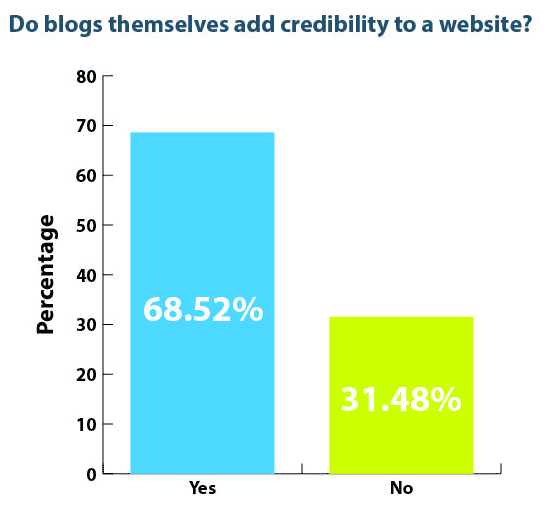
blog credibility

When he dug deeper into the specific factors that added credibility, “quality content” was at the top of the list.
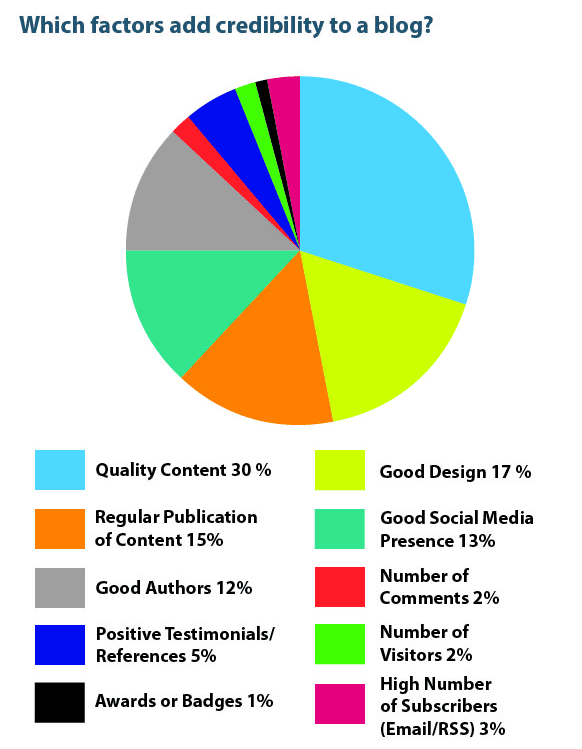
which factors add credibility to a blog

To further drive the point home, Bullas discovered that bad content is the largest factor that ruins blog credibility. It’s all about the content — it’s quality and “trustability”.
The logical conclusion is that the specific words and phrases that you use in your blog article will help to enhance trust.
These words will help you achieve the level of success you need to in your blog articles. Here’s how you can use them.
  • Add them to the end of your copy. Roger Dooley, who writes on the subject of neuromarketing, explained it this way: “One short sentence at the end of your ad could cause a major increase in the level of trust customers place in you? Believe it or not, it’s true. Researchers found that placing…[a] statement at the end of an ad for an auto service firm caused their trust scores to jump as much as 33%!” The mere presence of these words helps to enhance the trustability of a blog article.
  • Sprinkle them throughout your copy. These are just single words. You can sprinkle them throughout your copy to create an overall sense of assurance in the article as a whole.

Make these words a part of your regular vocabulary when you write, and you’ll be able to better gain the trust of your readers.

1. Trust.

Not surprisingly, the word “trust” enhances trust. If you want someone to trust you, simply tell them that they can.
There are many ways to impact trust, but the most direct way to do so is just by saying “trust.” You can use this word in a wide variety of ways:
  • Trust us.
  • Trust me.
  • Trust the data.
  • Trust the research
  • Can be trusted
  • Trusted us

2. Fair Price

When discussing pricing, tell your readers that they’re getting a “fair price.”
Every consumer has their guard up when they are making a purchase. Are they getting a fair deal? Are they losing money? Is it worth it?
Inform your readers that the price you are producing is a “fair price,” and the trust factor of your site will increase.
In Roger Dooley’s research, this phrase improved the trust factor by 7%.

3. Caring

People want to know that they are being treated right. Even though they are a reader, seemingly passive, they want to still feel as if they are respected, valued, and appreciated. The word “caring” can communicate this concept.
In Dooley’s study, the word “caring” improved trust factor by 11%.

4. Fair Treatment

The term “fair treatment” produces an uptick in trust for similar reasons to “caring.” In tests, this word improved the trust factor of a website by 20%.
“Fair treatment” is very user-centered. This idea of focusing on a user is essential in creating a good experience. User experience isn’t just about functioning menus and good design. It’s also about speaking directly to the user in the way that you compose your copy.

5. Quality

Quality is one of those words that just makes you feel assured. We all know the feeling that the product or service that we are receiving lacks in quality.
When you assert that your product or service has quality, you can gain your user’s trust.
In studies, this word improved the trust factor of copy by 30%.

6. Competency

Even though it’s a longer word, “competency” is a great one to use in your copy. In fact, as Dooley’s study indicates, it has the highest trust factor of any of the words he examined, improving the trust by 33%!

7. Apologize/Sorry

When you take the time and effort to apologize, people will trust you more. I’ve seen this happen in my own blogging experience. It’s amazing how people will jump on a simple typo or broken link.
When this happens, I fix it, apologize and move on. The simple act of saying “Sorry” shows readers that you care, and that you’re humble and transparent enough to own up to your mistakes.

8. Change

When you tell readers you’re changing, this can grow trust, too. Change is hard and uncomfortable. It also reflects an effort to get better and to improve.
Simple change-oriented statements will increase your trustability:
  • “We recognize that some of our previous articles weren’t detailed enough. We’re changing that now. Beginning in October, all articles will be 2,000 words or less, and be reviewed by a team of three editors.”
  • “Unfortunately, we had to let our marketing manager go. We are now changing our entire company structure to provide more care to the customer.”

9. Never

The word “never” is a negative statement, but when it’s used for a positive purpose, it can have a profound effect on your blog’s trustability.
Here are some examples of how you can use the word “never:”
  • Never release
  • Never share
  • Never misrepresent
  • Never overcharge
  • Never leave
  • Never hang up
  • Never neglect

10. Always

The word “always” is a lot like “never.” It suggests a sense of stability, assurance, and protection.
When you “always” do something, people have an easier time trusting you.
  • Always be free
  • Always protect your identity
  • Always have the lowest price
  • Always produce quality content
Use the word always a couple of times, and you’ve enhanced trust.

11. Privacy

People value their privacy. This is especially true in an era of constant security breach, identity theft, corporate hacks, and data loss.
When you tell people that you’ll protect their privacy, respect their privacy, guard their privacy, and honor their privacy, they are more likely to trust you.

Conclusion

The next time you write a blog, think about trust.
Will people trust this content?
Why will they (or won’t they) trust it?
What can you do to improve their trust in the blog post?
These simple words and phrases will go a long way in improving your blog’s trust.
What do you do to enhance trust in your blog posts?


https://blog.kissmetrics.com/words-that-enhance-trust/#comment-883925 

Friday, 22 August 2014

Selling Internationally with the eBay Global Shipping Program

162701_EW_Images_eBay_IntShipping_Masthead
As an eBay seller, you have access to customers across the entire globe. And eBay’s statistics show that selling to international buyers can be an easy way to grow your sales. But since selling internationally involves customs, tariffs and taxes – all items that can seem complex, many sellers do not open their listings up to international buyers.
In response to these seller concerns and to help make the international sales process as simple as possible, eBay has created the Global Shipping Program. Here’s what you need to know to get started.
What is the eBay Global Shipping Program? 
As a seller enrolled in the eBay Global Shipping Program, you’ll be able to sell internationally to buyers in many different countries, but will not need to ship your items to the international destination. You will only need to send your items to a shipping center located in the U.S. After you make an international sale, eBay will provide you a domestic address inside the U.S. to ship your package to. Once your package is received at the eBay warehouse, eBay will then reship your package to the international destination managing all the customs forms, duties and taxes for you.
If you’re apprehensive about selling internationally, this is the program for you. When you participate in the Global Shipping Program, you’ll:
  • Expand your business internationally in a snap. Let eBay manage the logistics, such as navigating customs forms, duties and taxes for all packages going overseas.
  • Be protected. Should your shipment become damaged or lost in global transit, eBay won’t charge you seller fees, and you’re covered under PayPal Seller and eBay Buyer protection plans, too.
  • Be able to sell to customers in at-risk countries. If you’re interested in working with buyers in at-risk locations, such as Brazil, Italy and Russia, eBay is there to assist.
(Note there are extra costs associated with this service and some sellers worry that their international buyers may get scared away by the overall costs of the product.)
Eligibility Criteria
Deciding to sell internationally is a big decision, but it’s just the first step in the process of qualifying for eBay’s Global Shipping Program. You’ll need a seller rating of “standard” or higher, as well as a verified PayPal account and at least 10 Feedback points. Your first successful eBay sale must have occurred at least 90 days prior, and you will need to make sure you comply with the selling requirements of the countries with which you intend to work.
Next, make sure you meet the Listing Eligibility criteria outlined by eBay. As with domestic selling, dealing in certain items (for example, fine jewelry, nail polish, fossils, printer toners, and many other seemingly innocuous items; check here before listing) is restricted or prohibited.
Eligible Countries
The world’s a big place, and eBay deals with a lot – but not all – of it. Know which countries you can sell to by checking the list here. Make sure you refer to this resource often, as the list can change over time.
Setting Up the Global Shipping Program inside the eBay UI
Now that you’ve established that you’re eligible for the program, here are the steps to take to opt in.
  1. Visit My eBay after you log in.
  2. With your cursor on the Account tab, click down to Site Preferences.
  3. Select Shipping Preferences.
  4. Choose Global Shipping.
  5. Click on Join Now.
  6. Accept the Terms & Conditions.
Once you’ve finished with these prompts, the Global Shipping box will be visible on the regular selling form. If you use outside listing tools, be sure to set your account to sync with these eBay settings.
Shipping Made Simple
When you’re part of the program, shipping labels printed via eBay automatically print to ship to Kentucky, where the eBay Global Shipping Program is headquartered (it’s likely more centers will open in the future).
With your eBay-generated shipping label, your tracking information is automatically uploaded; if you choose to use a different method of making shipping labels, just upload the tracking number yourself onto the site. Using this tracking information, eBay will generate a global tracking number that you can access via My eBay and the Order Details page. Your buyer learns directly from eBay that the package is on route.
The Bottom Line
It takes a leap of faith to expand your business beyond borders, but there’s no need for trepidation with eBay’s Global Shipping Program behind you and your shop. Give it a try, and you may soon learn just how simple – and profitable – an international presence can be!


http://www.ecommerceweekly.com/marketplaces/ebay/selling-internationally-with-the-ebay-global-shipping-program/

Wednesday, 2 July 2014

10 ways to make extra cash online


The internet is a great place to spend time and money, but with a bit of creative thinking there are plenty of ways to make pennies and pounds online.

1. Auction sites

Unless you’ve been hiding under a desktop computer for the past 10 years you will have heard of eBay, the most popular auction site on the web, but there are others like eBid.co.uk out there as well. Top-selling items include CDs, DVDs and video games.
It’s a good idea to set up a PayPal account as this is the preferred method of payment, but you can read our tips, tricks and what to look out for to help you get set up. Alternatively sites like RentNotBuy.co.uk will let you advertise your stuff to hire out, rather than to sell it. In the process, you can make a bit of money without having to depart with your possessions.

2. Classified Ads

If you don’t like the risk of entering your items on an auction site then the traditional route of advertising at a fixed price is a better option.
The internet has taken over from newspapers and notice boards as the place to put classified ads. Gumtree and Preloved are two of the biggest sites where you can put up adverts of items you want to sell, complete with images and descriptions. Better yet, both are free to use. If it’s novels and CD’s you’re selling, try specialist retailers Greenmetropolis and Musicmagpie.

3. Surveys

There are few things more mundane than filling in a survey, but what if you got paid for it? There are a fair number of research agencies who pay a small amount to people who complete surveys online, all you have to do is answer the questions.
Do your research into the company first, some of the bigger ones are sites like Panelbase, Valued Opinions, and Toluna. You can expect to earn anywhere from £0.50 to £5 a survey.

4. Advertise yourself

If you like to share your thoughts with the world on a blog site and you’ve got a few followers you could make money out of it.
Using Google Adwords you can put advertising on your site and make money every time people click on the ads. The more people click, the more you make.

5. Sell what you make online

It’s not just music and movies that can be sold online. Specialist sites like Etsy are designed for people with hidden talents like knitting and sewing.
This dedicated arts and crafts online store is US-based but operates internationally, and has a category for just about everything homemade. You can also sell things on eBay of course, or on Gumtree or Preloved.

6. Child’s play

Styles may change but the one constant of children’s clothes is that they’re quickly outgrown. If you have lots of baby clothes and toys that you’re trying to get rid of, take a look at National Childbirth Trust sales.
Another good site is the community website Netmums, which has a classifeid section where you can advertise.

7. Photo sales

Budding photographers can turn their hobby into a profit online. You can send digital photos to online agencies and, if they are used, you get paid.
There are lots of sites out there, many with tips on how to increase the chance your photo will be used. Search around for sites but you can start with Alamy.

8. Cashing in

While many of us have moved from buying essentials in the high-street to buying online, not so many make money whilst doing it.
Cashback sites like Quidco and eCashback offer you money back by buying through them. Start with sites that give you instant cash just by signing up, such as Rpoints, which gives you £5. Better yet you can read our full guide to cashback sites and plan your shopping accordingly.

9. Staying mobile

If you haven’t heard about sites that buy your old mobile phones, then you’ve somehow managed to avoid their advertising. These sites offer anywhere from a few pounds to a few hundred for old phones, depending on the model and the condition.
The company will usually send you a pre-paid addressed envelope so that you can post the phone back to them, or you will be asked to send the phone in a jiffy bag to a freepost address. Popular sites include Envirofone and Mazuma, and remember to use registered post.

10. Switch your bank

A lot of people may want to switch banks, but most consider it to be too difficult and time-consuming to be worthwhile, particularly with the paltry interest rates offered by most current accounts.
However, a number of banks including First Direct, a Which? recommended provider, offer you a cash incentive to switch, and you can do most of the work online. Easy money, and a better bank account - read our full guide to switching for more.

http://www.which.co.uk/money/bills-and-budgeting/guides/10-ways-to-make-extra-cash-online-/